 |
| Flourless Chocolate Cake with Secret Vegetables inside! |
Monday, January 3, 2011
Great Home Cooks in Queens


Friday, December 31, 2010
Writing for The Food Network
 |
| Cranberry Pomegranate Terrine from FoodNetwork.com |
During my Fall 2010 semester, I was an intern at The Food Network cable channel. I worked in the Digital Food Department and one of my duties was writing and posting weekly articles for the Food Network blog, FN Dish. Here are some of my favorite posts.
Wednesday, November 3, 2010
The Great Pumpkin Cook-Off
 |
| The Great Pumpkin Cook-Off |
Pumpkin Apple Cheese Soup
2 Tbsp Butter
1 Pound peeled, seeded pumpkin ~2 cups
2 cups peeled, cored, chopped apples
½ cup chopped leeks or onions
½ cup chopped carrots
2 ½ cups low sodium chicken stock
1 Tbsp brown sugar
1 tsp salt
1/4 tsp white pepper
Pinch cinnamon, nutmeg, ground ginger, cayenne
1 cup grated cheese, cheddar or smoked gouda or combo
1. Wash and cut pumpkin in half. Roast in a 450 oven for about half hour.
2. Meanwhile, heat butter in a big soup pot.
3. Sauté leeks, carrots, and apples until tender.
4. Add spices and chicken stock and simmer until vegetables are very tender.
5. Remove skin and puree cooked pumpkin in food processor or food mill.
6. Add pumpkin and cheese to soup and stir to combine.
7. Puree soup with an immersion blender, or using food processor.
8. Strain through a mesh sieve (optional).
9. Add more stock or water for consistency. It should pour from the
spoon in an even stream, not in clumps.
spoon in an even stream, not in clumps.
10. Taste and adjust seasoning.
Friday, August 27, 2010
Queens Harvest Food Co-op: Where the Shoppers Own the Store

Thinking she is making a healthier choice for her family, an American supermarket shopper picks up a carton of light ice cream unaware that the ingredient list contains transgenic fish and genetically modified corn and soy derivatives– untested substances that, in other parts of the world, are forbidden to be sold. She places it in her cart next to the package of hamburger patties that are manufactured with ammonia-based filler at an unsanitary slaughterhouse in an effort to curb the rising incidence of e-coli food poisoning.
Despite the fact that most of us eat three times a day, there is no question that Americans have become disengaged from the realities of our food system as well as the long-term consequences of this disconnection. Residents of western Queens have taken up this cause and are forming the borough’s first food co-op. The Queens Harvest Food Co-op, slated to open in 2012, will sell anything that might be sold by a store like Whole Foods or your regular grocer. The difference is that the shoppers own the store.
A food co-op is a member-owned, member-controlled business that buys food and household items for its members. By controlling everything from sourcing to pricing and marketing, food co-ops offer consumers a retail environment free of coercive sales influences, and with full disclosure of product quality and value.
Members range from engaged food activists to avid home cooks seeking the best ingredients and prices. They have varied reasons for wanting to be a part of the co-op, since food is such a personal subject. “I’m looking for a meaningful alternative to the conventional food system and a way of buying food that I can participate in,” explains Christine Caruso, who serves on the co-op’s outreach committee. According to their mission statement, the Queens Harvest Food Co-op aims to increase access to affordable, good quality food based on the needs and voices of members, as opposed to a grocery store where the pricing and selection are determined by outside forces. The co-op is to be located in Queens Plaza, Long Island City to address the need for a quality, affordable grocery store in the area, and also because it is a transit hub.
Unlike some other co-ops in the city which operate on a “closed model” where only working members can shop, the Queens Harvest Food Co-op will be open to the public. Shoppers who choose to volunteer their time to help run the store will get a discount, and non-member shoppers who do not have time to volunteer will pay market prices. Reflecting the economic diversity of Western Queens , co-op organizers hope that this model will allow as many people as possible to enjoy the benefits of co-op shopping. This working model reflects the guiding principles of the co-op, which include social responsibility, sustainability, and community. The Queens Harvest Food Co-op will provide products affordable to community members, employ socially responsible practices and product sourcing, and aims to accept food assistance programs (such as WIC and SNAP).
Greener than your average grocery, the co-op will also employ sustainable practices (minimally packaged products, bulk bins), purchase from independent, local, sustainable and organic sources, and be built and operate as environmentally responsibly as possible. For the community, the co-op plans to offer classes and resources about healthy living, social responsibility and sustainability, as well as to honor diversity and be a welcoming place for all people.
Since opening the store is about a year away, the Queens Harvest Food Co-op is holding regular outreach events to spread the word and invite more potential members to participate in the planning process. In August, they hosted an Iron Chef Salad Throwdown at Astoria Park in which chefs from the co-op battled it out to win the crowd’s vote for best salad (see photo), using produce donated from local farms.
The co-op will be holding its first major fundraising event this fall on Wednesday, October 27th from 6-9pm at the Foundry in Long Island City Queens area restaurants' food and wine, light music, a raffle/silent auction, and a special guest. Money raised from the evening will go to the co-op’s fund for projects such as low-income outreach, a feasibility study, and a formal business plan to attract investors.
Interested in getting involved but curious how you might fit in? The Queens Harvest Food Co-op operates by committees and is particularly seeking people who are familiar with grant writing, research, and fundraising, as well as those familiar with commercial real estate, grocery operations, and industrial or structural engineering.
For more information about the Oct. 27th event, or to learn more about the co-op, visit their website at www.queensharvestcoop.com. Lively and informative monthly general meetings are held in Long Island City
Saturday, July 10, 2010
Italy Journal 10 - A Cautionary Tale of Good Fortune

I wrote this up in the airport yesterday. Something was compelling me to get all the words out before leaving this beautiful, crazy country. I hope you enjoy it.
Journal 10 - A Cautionary Tale of Good Fortune
It was a hot, sunny Sunday, actually the Fourth of July, when, along with two classmates, I took a train out of the Santa Maria Novella train station in Florence to the Tuscan countryside, a small town called Castagno, to swim at the pool of a fancy hillside resort. I had read about the pool in the English-Florentine newspaper a day earlier. Locals in Florence always leave town on the weekends since it is so hot and touristy in the city. At this point on our trip, we no longer considered ourselves "touristas" since we had been living in Italy for almost a whole month and knew our way our Florence really well.
We transferred trains in a place that can only be described as a creepy Italian ghost town. It was solely populated by a dusty luncheonette which luckily served not only pork panini but also tuna wraps–-a bonus for my hungry friends who were each Jewish and Muslim. After lunch we found our local train and a short ride later we arrived. At the local station, we planned to use the ATM (called a bancomat here) and check the return schedule home. You can imagine our surprise to see that the rural station was nothing more than a dilapidated shack, sort of an homage to where a station maybe once stood. There wasn't even a sign to mark the train stop!
My euros were few, and I planned on getting cash at the Florence train station, but the machines were all broken. One of the girls was planning to exchange some US Dollars for Euros, but all of the exchange places were closed. So, before we left, I asked the third girl if she had enough money on her, explaining that we were broke but would pay her back upon returning, and she said okay. An hour later, on the train, I learned that the third girl only had a few euros for herself but that she was willing to share what she had. Knowing the cost was about 15 each, I was praying the resort would accept credit cards – it was too late to turn back.
We inhaled the pungent perfume of Tuscany, a gorgeous blend of fresh air and the sweet smell of the woods, and knew instinctively that everything would somehow be okay. Walking down a very steep hill, we spotted our destination immediately—a rectangular blue oasis in the center of about a hundred very tanned people. Around the pool was a fence of ancient looking white stone columns, attached to the side of an enormous stone mansion.
Explaining our situation to the pool manager with all the charisma we could muster, he responded in broken English, "No money, no pool. Who travels to Italy with no money? What is wrong with you?" After a brief conference in which going home was never discussed, we decided to try him again, with our doe-eyed, sweaty and pitiful faces. We were standing there with our towels and flip-flops, and finally the man took pity on us and allowed us to enter for the sum of our entire collection of euro coins, a few small bills and an American $20 bill. Woohoo!! We had a great relaxing time at the pool and in the sun and packed up a few hours later to go home. After changing, we returned our locker keys, went to thank them, and asked about the train schedule back to Florence. At this moment, we learned that the last train had left an hour ago. No more trains until tomorrow.
 We still had no money between the three of us and were starting to worry. Stranded at a fancy resort in the hills of Tuscany is not the worst place to be, but we needed to get ourselves home to Florence for class the next day. I called Kevin on my cell phone and asked him to check the online train schedule for us to see if there was any way hope of leaving. The pool manager, Peter, who we were now on a first name basis with, again took pity on us and offered us a ride in his car to our transfer point – back to the ghost town, where we were able to catch an evening train back to Florence. The fact that he drove a regular car and not a scooter like everyone else was another huge stroke of luck. He flirted with one of the girls in broken Spanish along the way, as it was the easiest language to understand each other in. Peter, incidentally, looked exactly like how you would imagine a bronze 31 year old pool manager in Tuscany to look like. And he was charming. I appointed him Santo Peter (Saint Peter) for letting us into the pool and then driving us back in one piece. Seeming like the kind of guy who drives a car exclusively for the back seat, he thought that was hysterically funny.
As a side note, I'd like to say that you should never travel without any cash. You should also never get in a car with a strange man no matter how nice he seems. And always check the train schedule ahead of time. Don't expect anything to be open on Sunday, either. End of public service announcement.
Back in Florence, we found an ATM, celebrated our good fortune and fun day with some gelato, strawberry cheesecake flavor this time, and the three touristas americanas, grateful for a day of Italian hospitality, enjoyed a nice walk home.
Wednesday, July 7, 2010
Italy Journal 9 - Cataloging Memories
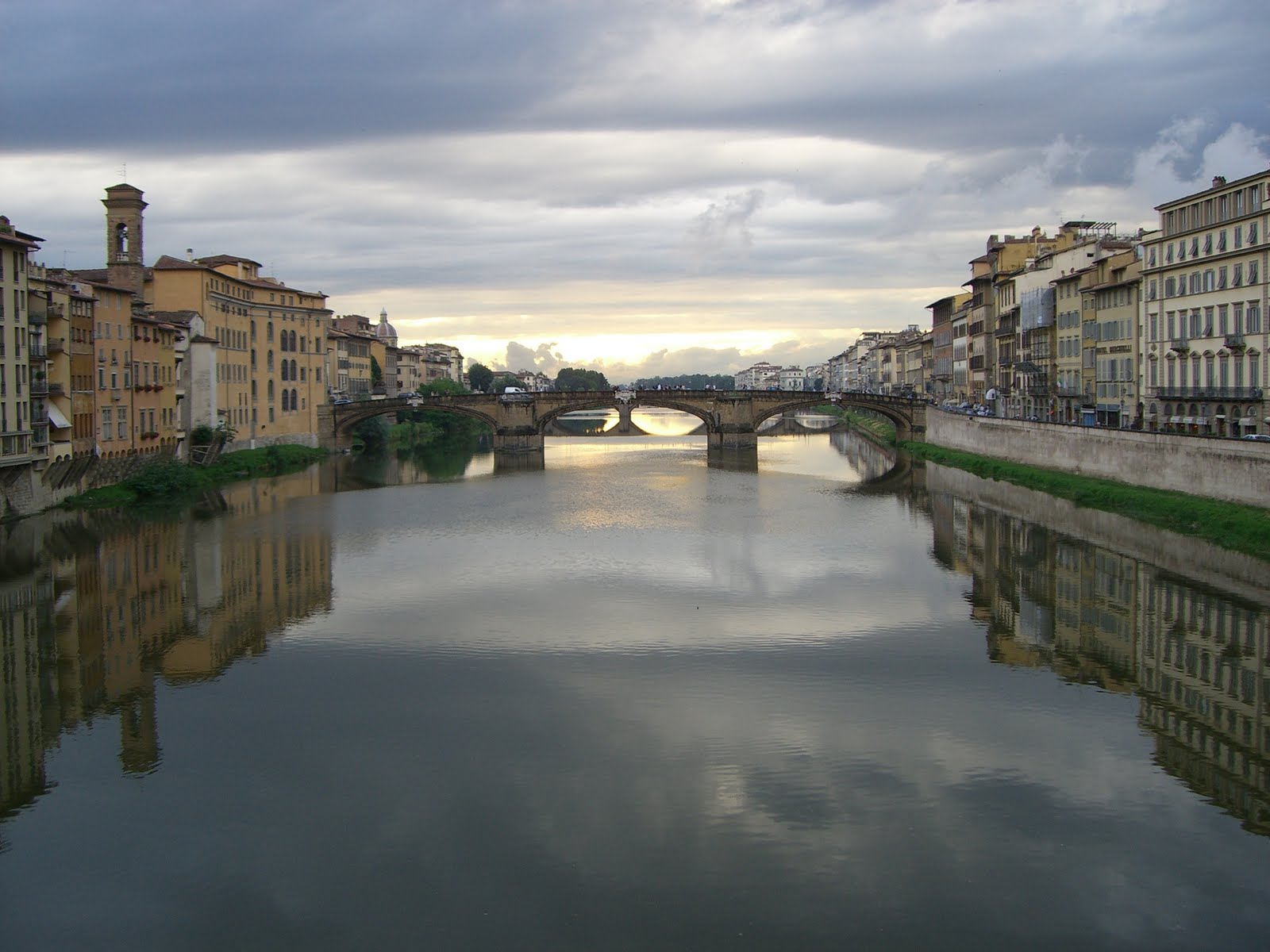
It is Wednesday night and I began packing my suitcase to see how much room is left, and to see how many amazing Italian delicacies I can bring back. So far I've got lots of truffles, porchini mushrooms, sundried tomatoes, farro, lentils, barlotti beans, balsamic vinegar and parmesan cheese. Plus some scarves, shoes and other small items. No wine or olive oil because it's too heavy. Mostly I'm bringing back memories—sense memories—the strongest of which are the amazing aromas of Italy, the sweet smell of the Tuscan air, the saltiness of the proscuitto house, the strong smell of parmesan cheese aging, and the fancy perfume on the ladies walking through the fashion district in Florence. Earlier today I went walking through the San Lorenzo market – a huge indoor farmer's market where you can get meats, fishes, produce, fresh pasta, and many specialty products. What an amazing place to just wander, smelling and watching…
Sunday, July 4, 2010
Italy Journal 8 - Teatro del Sale & Parma/Modena

Friday was one of my favorite days yet in Florence. In my cooking class, we made Saltimbocca alla Romana which are thin veal cutlets rolled with proscuitto and sage leaves, cooked in olive oil and marsala wine. The drippings are thickened into a sauce and served on top. The taste is at once earthy, salty, and sweet – like a party in your mouth that you just don't want to end. To my horror, one of my station-mates in class got a bunch of paper towels to "blot all that greasy stuff off" her piece. Some people just do not deserve to eat in Italy!!
After class I went for a walk in a different part of town and got completely lost for about an hour. Florence has many tiny streets that sometimes feel like they just lead you in circles, and since the streets are so narrow, unless you are in the center of town, it's not easy to orient yourself according to the landmarks, unlike New York. With my useless map in hand, I just walked around and around until things finally started to look more familiar. Another interesting thing about Florence is that the locals don't know the names of streets, either. So if you are, say, trying to find a particular street, unless you know a nearby landmark/church/or market, you are pretty much out of luck getting directions.

In order to have dinner at Teatro del Sale, you have to become a member, at the cost of 5 Euro for one year for foreigners. Locals pay more. There can only be 99 members at any given time, so it is never overcrowded or touristy. When you walk in, it is clearly an old Theater, but all the seats have been detached from the floor and are positioned around small dinner tables mostly for 2 or 4 people. The ceiling is huge, with old wooden rafters and there's a stage with regal velvet curtains. Off to the side is a table with unlimited water, seltzer (called Frizzante here) and free flowing red table wine. There's fancier wine for purchase, too.
A buffet table with servers has about 15 different vegetable and pasta dishes, everything from pesto pasta to hummus, braised carrots, lentils, baked tomatoes, fresh bread sticks, etc. Through a huge glass window you can watch the chefs work on the various meat and fish courses. When something is ready – be it mushroom soup served in mugs sans spoons, meatballs livornese, clams and mushrooms, baked eggplant with cream, or any other number of amazing dishes, one of the chefs passionately sings out a description of the food (in Italian) at the top of his lungs and we go up to the window to get our individual portion directly from the cooks. I was with my friend Julie and each time we went up, this particularly charming young chef would generously describe each dish and its ingredients to us in English.
You return used plates to the dishwashers through a little opening near the kitchen. Even the guys doing the dishes are happy and seem to have having a good time. Back there, they are eating the same food as us. At the Teatro, everyone seemed to be happy to be there, especially the staff. This added so much to the experience.
Dinner began at 7:30 and was over by 9:15 and I could not have eaten one more bite! Toward the end, I was taking dishes just to taste them as I was so full of goodness. My meal at Teatro del Sale was without a doubt the most delicious one I've had here, and that says a lot considering some of the food I've had the pleasure of tasting over the past three weeks. The show part of the evening was two Italian jazz musicians singing Bob Dylan with guitar and bass accompaniment. I asked my 20 yr old companion if she liked Bob Dylan and she said she only knew him from the TV show "Full House". (That's Bob Saget, the comedian, not Bob Dylan, I said with a smile.)
 Since I didn't take any pictures at Teatro del Sale, I am attaching some photos of my trip through Parma and Modena where I saw/tasted parmesan cheese making, proscuitto aging, and tasted real balsamic vinegar. I am bringing back a huge piece of real parmesan cheese and some traditional balsamic vinegar that was aged for 25 years. The proscuitto is aged in the countryside of Emilia Romagna. The salty winds of the sea meet the northern winds and it's the combination of special air that lends the meat it's special taste.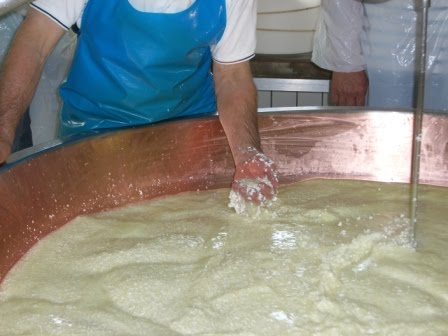


Subscribe to:
Posts (Atom)